
No products in the cart.
1-Way vs 2-Way Light Switches: Which Do You Need for Your Home?
Buying light switches can become confusing when you encounter descriptions such as 1-gang 1-way, 1-gang 2-way or 2-gang 2-way. These terms describe how a switch functions, and choosing correctly matters just as much as finding your preferred colour.
The main difference is simple: a 1-way arrangement controls a light from one location, while a 2-way arrangement allows you to control the same light from two locations. Control from three or more locations requires a different arrangement, commonly using intermediate switches alongside two-way switches.
This guide from Keable Electrical Supply explains the differences, practical uses and buying considerations for homeowners in Kenya.
What Is a 1-Way Light Switch?
A 1-way light switch turns a light or group of lights on and off from one position.
For example, a small room may have one switch beside the entrance. You use that same switch when entering and leaving.
Where does 1-way switching work well?
It can suit spaces where one control point is convenient, such as:
- A small room with one entrance.
- A pantry or store.
- A utility room.
- A lighting zone that only needs control from one position.
The decision depends on how you use the space. A room with one doorway may still benefit from an additional bedside or seating-area control.
What Is a 2-Way Light Switch?
A conventional 2-way lighting arrangement uses two suitable switches so you can operate the same light from either position.
Imagine a staircase: you turn the light on downstairs, walk upstairs, and turn it off using the other switch. You can also operate it in the opposite direction.
Where is 2-way switching useful?
Consider it for:
- Staircases with controls at the top and bottom.
- Corridors with controls at both ends.
- Bedrooms with controls at the entrance and bedside.
- Rooms with two frequently used entrances.
- Garages with access from the house and an external doorway.
Buying one 2-way switch does not automatically create control from two locations. The complete arrangement needs suitable switches and wiring.
1-Way vs 2-Way Switches at a Glance
| Feature | 1-way arrangement | 2-way arrangement |
|---|---|---|
| Control locations | One | Two |
| Everyday example | A store light controlled beside its door | A staircase light controlled upstairs and downstairs |
| Main benefit | Straightforward control from one position | Convenient control from either position |
| Planning requirement | Identify the most useful control point | Identify both control points before wiring |
| Replacement consideration | Confirm the existing switch function | Preserve the required two-way function |
Your electrician should confirm the correct arrangement and product specification before you order.
Does “2-Way” Mean the Switch Controls Two Lights?
No. “Way” describes the switching function; “gang” describes the number of individual switch controls on the faceplate.
A single control can operate one light or a group of lights wired to operate together. The number of lamps does not determine whether switching is one-way or two-way.
For example:
| Product description | Meaning |
|---|---|
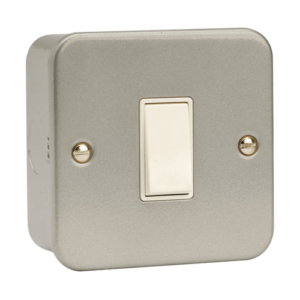
| 1-gang 1-way | One control for one-way switching |
| 1-gang 2-way | One control suitable for two-way switching |
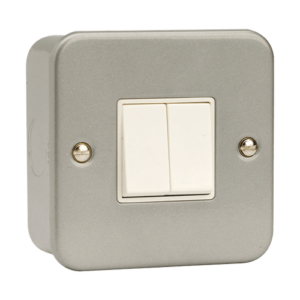
| 2-gang 1-way | Two separate controls for one-way switching |
| 2-gang 2-way | Two separate controls, each suitable for two-way switching |
A living room might have a 2-gang switch because the ceiling lights and wall lights need separate controls. Whether either group needs control elsewhere is a separate question.
Can a 2-Way Switch Be Used for 1-Way Switching?
Many conventional mechanical 2-way switches can also serve a 1-way application when installed according to the manufacturer’s instructions. Manufacturer product information may explicitly state suitability for both functions.
However, confirm the specific product before buying. Smart switches, electronic controls and specialist accessories can have different requirements.
Your electrician should select and install the appropriate switch for the circuit.
Can You Replace a 1-Way Switch with a 2-Way Switch?
A suitable 2-way switch may replace a 1-way switch while retaining control from the original position.
Adding a second control position is a separate alteration. Changing the faceplate alone does not provide two-location control.
Before an upgrade, ask your electrician to assess:
- The existing wiring.
- The proposed second switch position.
- Cable routes and installation work required.
- Back-box depth and mounting compatibility.
- Whether conventional switching or another suitable control system best meets your needs.
Plan this early during construction or renovation, when cable routes are easier to accommodate.
What If You Want Control from Three Locations?
For conventional mechanical switching, control from three locations commonly uses two 2-way switches and an intermediate switch. Additional intermediate switches can extend the arrangement to more positions.
This can be useful for a large room with several entrances or a bedroom with controls at the doorway and both sides of the bed.
An intermediate switch has a different function from an ordinary 2-way switch. Ask your electrician to specify the full arrangement before ordering.
How to Choose the Right Light Switch for Each Room
Bedrooms
Think about your evening routine. If you want to switch off the main light after getting into bed, plan a bedside control alongside the entrance switch.
If both occupants need independent access to a control, discuss the additional switching requirements with your electrician.
Staircases
Controls at the top and bottom let you operate the light at either end of your journey. Confirm the locations before decorating or installing wall finishes.
Corridors
Consider where people enter and leave. A corridor used from both ends may benefit from two-way switching; additional access points may justify more controls.
Living rooms
Start by separating your lighting groups, such as ceiling lights, wall lights and decorative lighting.
Then decide how many controls belong on each faceplate and where each group should be operated.
Stores and utility rooms
A single control beside the entrance may be sufficient. Check that the switch remains accessible after shelving, appliances or storage are installed.
What Else Should You Check Before Buying?
Electrical rating and load suitability
The correct switching arrangement is only one requirement. Your electrician should also confirm that the switch is suitable for the connected lighting load.
For LED installations, check the manufacturer’s stated compatibility and load limits.
Back-box compatibility
Confirm the required box depth, mounting arrangement and available wiring space, especially when replacing existing fittings.
Finish and matching accessories
Once the technical requirements are clear, choose a finish that coordinates with your sockets and other accessories.
Options may include white, black, black and gold, brushed steel or antique brass. Check availability across all the configurations your project requires.
Dimming requirements
A standard on/off switch does not provide dimming. If you want adjustable brightness, specify compatible dimmers, lamps or drivers and the required control arrangement.
Smart control requirements
A conventional 2-way switch is not automatically a smart switch. App control, voice control and wireless operation depend on the chosen system and its installation requirements.
What Affects Light Switch Prices in Kenya?
Prices vary with the product range, number of gangs, switching function, finish and additional features.
Compare equivalent products. A decorative multi-gang switch and a basic single-gang switch differ in both appearance and function.
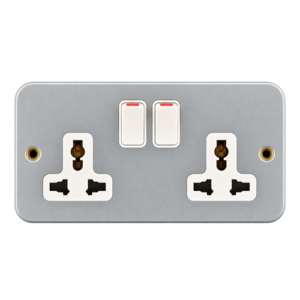
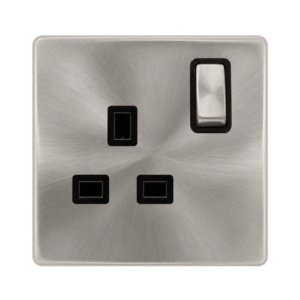
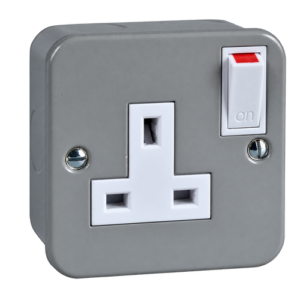
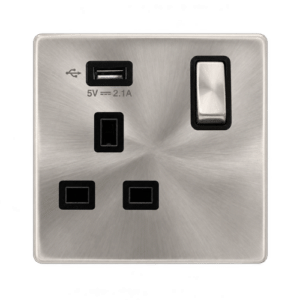
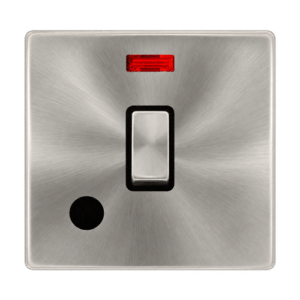
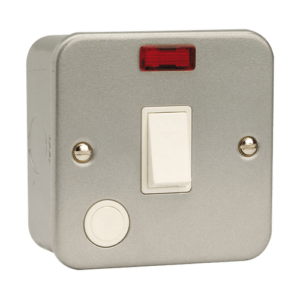
For an accurate quotation, provide:
- The number of gangs.
- Whether 1-way, 2-way or intermediate switching is required.
- The quantity of each configuration.
- Your preferred finish.
- Any dimming or smart-control requirements.
Contact Keable Electrical Supply on 0718 821018 for current prices and availability.
Frequently Asked Questions
Which is better: a 1-way or 2-way light switch?
The right choice depends on where you need control. One-way switching suits a single control position; two-way switching provides control from two positions.
Does a 2-way switch save electricity?
Two-way switching adds convenience. It does not inherently reduce the electricity a light consumes, although convenient controls may make switching unused lights off easier.
Can a 2-gang switch control two separate lighting groups?
Yes, provided the switch and installation are suitable. Each control can operate its assigned lighting group.
Why does a 2-way switch not always have a fixed “on” position?
In a conventional two-way arrangement, the light’s state depends on both switches. Operating either switch changes whether the light is on or off.
Should I buy switches before consulting my electrician?
Have your electrician confirm the configurations, ratings and quantities first. You can then choose a coordinated finish without overlooking the required functions.
Order the Right Light Switches from Keable Electrical Supply
Choosing correctly starts with two questions: How many lighting groups need separate control, and from how many locations?
Use those answers to prepare an accurate switch list, then select a finish that complements your home.
Building, renovating or replacing light switches? Send Keable Electrical Supply your electrician’s schedule, quantities and preferred finish for product enquiries and a quotation.
Call or WhatsApp: 0718 821018
Keable Electrical Supply — switches, sockets and electrical materials for your home and project.




Add comment